Archives
- 2026-08
- 2026-07
- 2026-06
- 2026-05
- 2026-04
- 2026-03
- 2026-02
- 2026-01
- 2025-12
- 2025-11
- 2025-10
- 2025-09
- 2025-03
- 2025-02
- 2025-01
- 2024-12
- 2024-11
- 2024-10
- 2024-09
- 2024-08
- 2024-07
- 2024-06
- 2024-05
- 2024-04
- 2024-03
- 2024-02
- 2024-01
- 2023-12
- 2023-11
- 2023-10
- 2023-09
- 2023-08
- 2023-07
- 2023-06
- 2023-05
- 2023-04
- 2023-03
- 2023-02
- 2023-01
- 2022-12
- 2022-11
- 2022-10
- 2022-09
- 2022-08
- 2022-07
- 2022-06
- 2022-05
- 2022-04
- 2022-03
- 2022-02
- 2022-01
- 2021-12
- 2021-11
- 2021-10
- 2021-09
- 2021-08
- 2021-07
- 2021-06
- 2021-05
- 2021-04
- 2021-03
- 2021-02
- 2021-01
- 2020-12
- 2020-11
- 2020-10
- 2020-09
- 2020-08
- 2020-07
- 2020-06
- 2020-05
- 2020-04
- 2020-03
- 2020-02
- 2020-01
- 2019-12
- 2019-11
- 2019-10
- 2019-09
- 2019-08
- 2019-07
- 2019-06
- 2019-05
- 2019-04
- 2018-07
-
br Concluding remark br Acknowledgements
2020-12-30
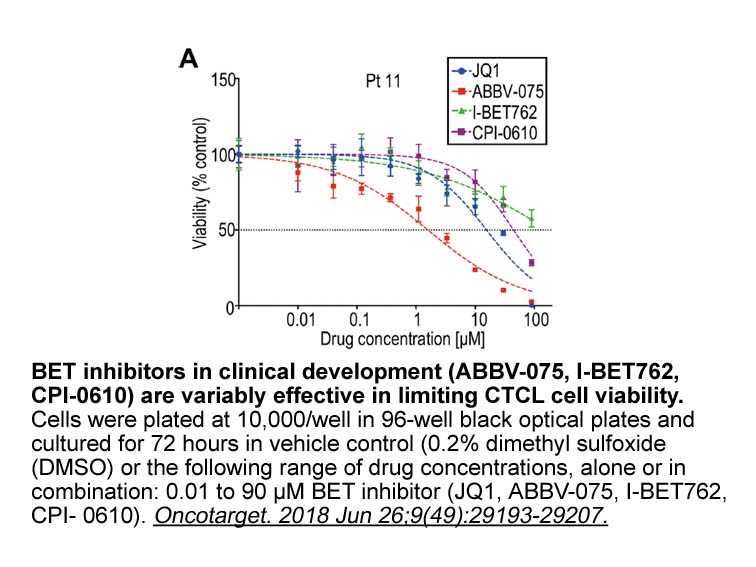
Concluding remark Acknowledgements Detection and repair of the numerous, and potentially lethal, DNA lesions arising in human Ac-IETD-pNA daily is largely mediated by an efficient system collectively termed the DNA-damage response (DDR). Paradoxically, DNA-repair processes within cancer cel
-
Traditionally serum triglycerides have been measured
2020-12-29
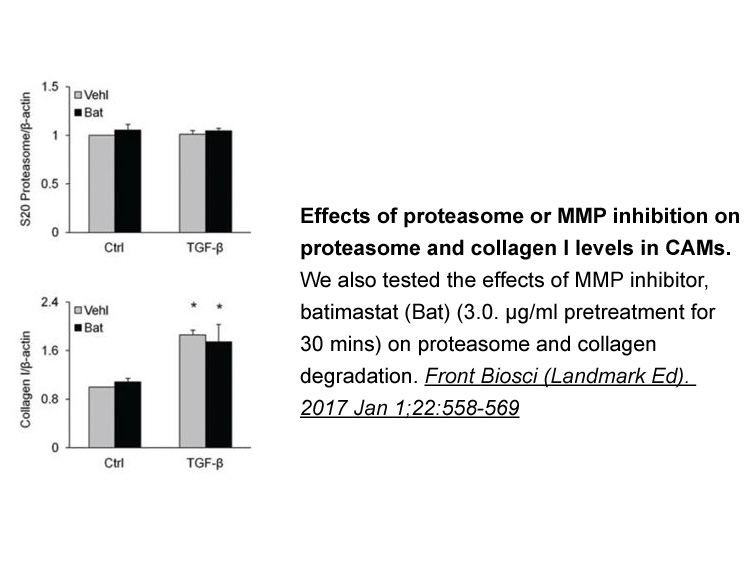
Traditionally, serum triglycerides have been measured in the clinic in the fasted state in order to reduce variability and also to facilitate the calculation of LDL-cholesterol via the Friedewald equation, which was derived using fasted samples (Warnick and Nakajima, 2008). We have previously report
-
Steady state mRNA levels of
2020-12-29
Steady-state mRNA levels of CYP3A isoforms were not changed during liver insufficiency. Suppression of these isoforms was observed only at the protein and activity levels, suggesting a nongenomic mechanism of CYP3A isoform downregulation during liver insufficiency. Nonetheless, transcriptional activ
-
Next we compared the protease specificity of
2020-12-29
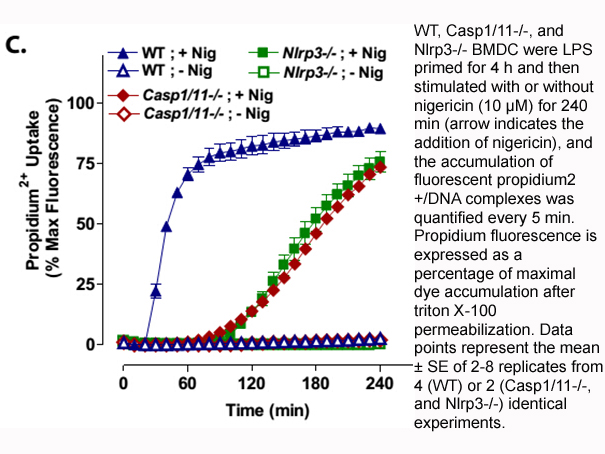
Next, we compared the protease-specificity of viruses NS116-GFP/AE and NS116-GFP/AT for trypsin, neutrophilic elastase or supernatant of human neutrophils. For later purposes, we determined the viral yield in a co-cultivation system of infected Vero levosimendan with human neutrophils. The NS116-GF
-
br Significance Our understanding of the ubiquitin biology h
2020-12-29
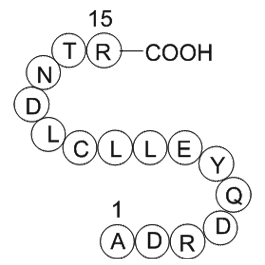
Significance Our understanding of the ubiquitin biology has been rapidly expanding. The role of the ubiquitin system in the pathogenesis of numerous disease states has increased the interest in finding new strategies to pharmacologically interfere with the enzymes responsible of the ubiquitinatio
-
br Acknowledgements Thanks are due to Science
2020-12-29
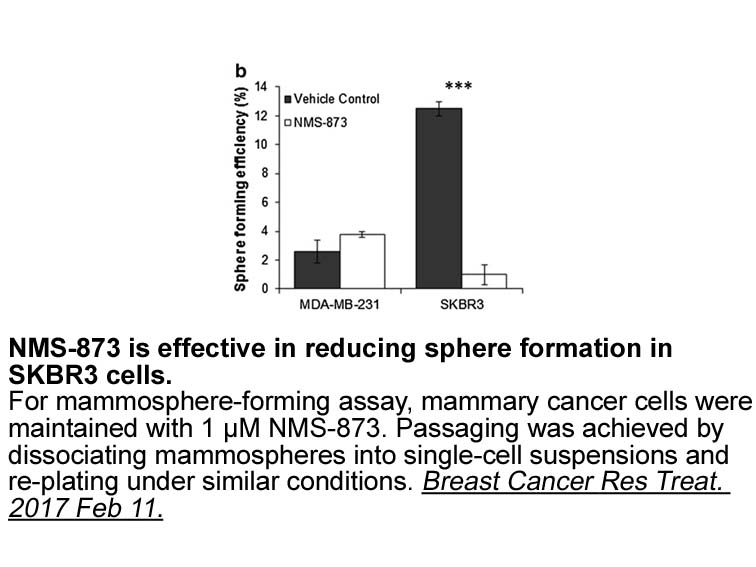
Acknowledgements Thanks are due to Science and Technology Development Fund – Egypt for the Research Support Technology Development Grant (RSTDG) no. 12626. Our deep thanks and gratitude is also extended to National Cancer Institute (NCI), Bethesda, Maryland, USA for performing the anticancer eval
-
br Results br Discussion MSCs derived
2020-12-29
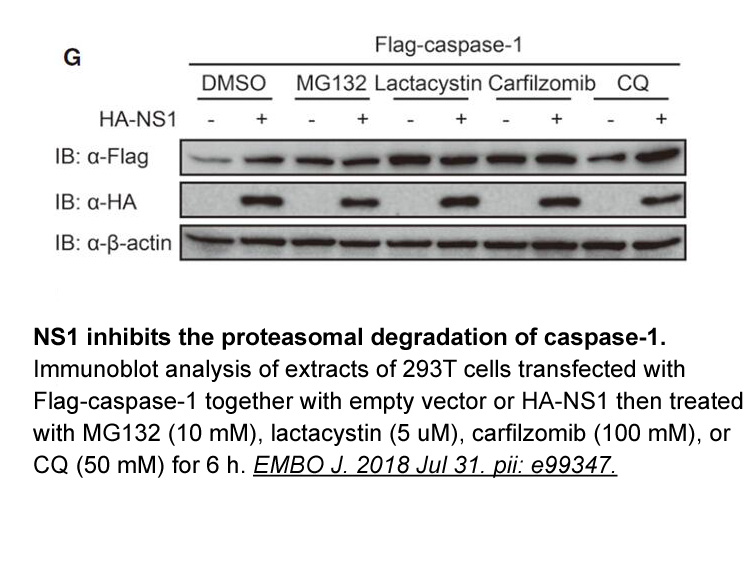
Results Discussion MSCs derived from the bone marrow and adipose tissue have been shown to promote the growth and metastatic ability of breast cancer and other human malignancies, but the mechanisms are incompletely understood (Barcellos-Hoff et al., 2013, Cuiffo et al., 2014, Del Pozo Martin
-
Proteases as multifunctional enzymes play key roles in contr
2020-12-29
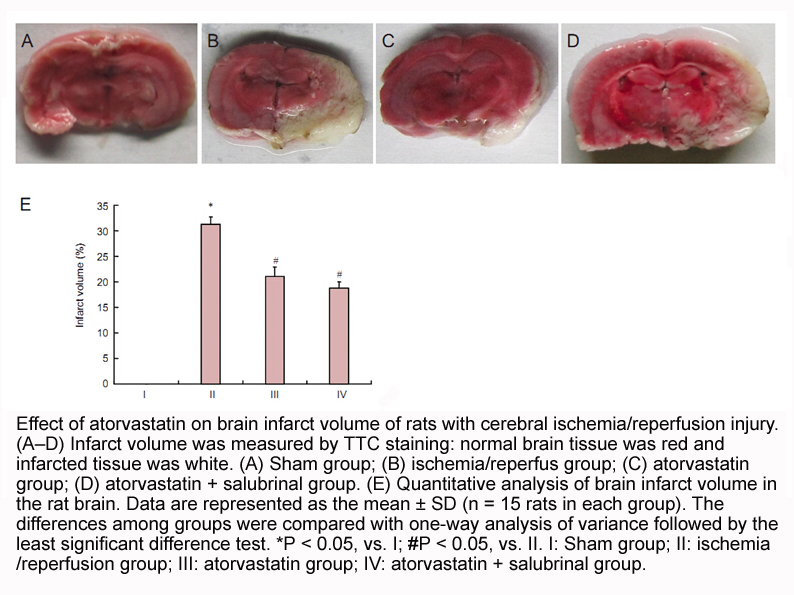
Proteases, as multifunctional enzymes, play key roles in controlling a wide variety of cellular and extracellular processes in plants and animals, including protein degradation and processing, germination, complement activation, inflammation, responses to environmental stimuli, senescence and so on.
-
The importance of G S phase progression to
2020-12-29
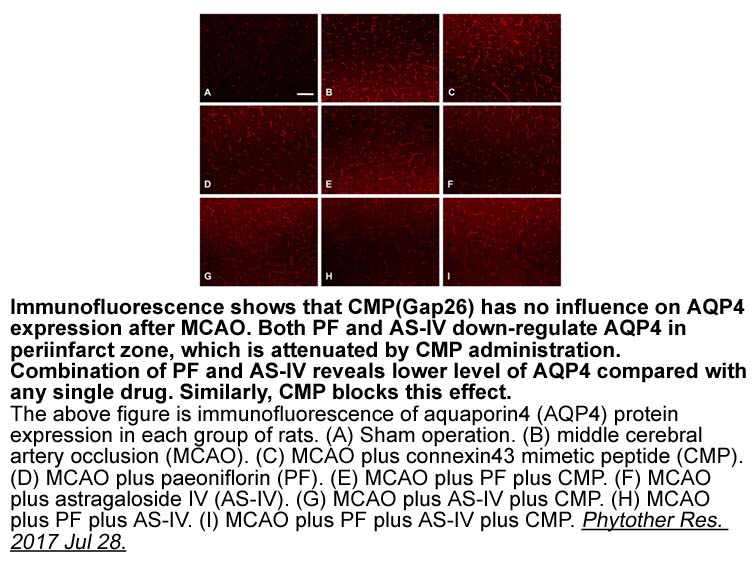
The importance of G1–S phase progression to the formation of malignant tumors has been highlighted by the high incidence of aberrations in the genes involved in this progression in a wide variety of tumors. p27Kip1 is a member of the Cip/Kip family of cyclin-dependent kinase inhibitors (CKI). Its ro
-
During recent years two primary types of models have
2020-12-29
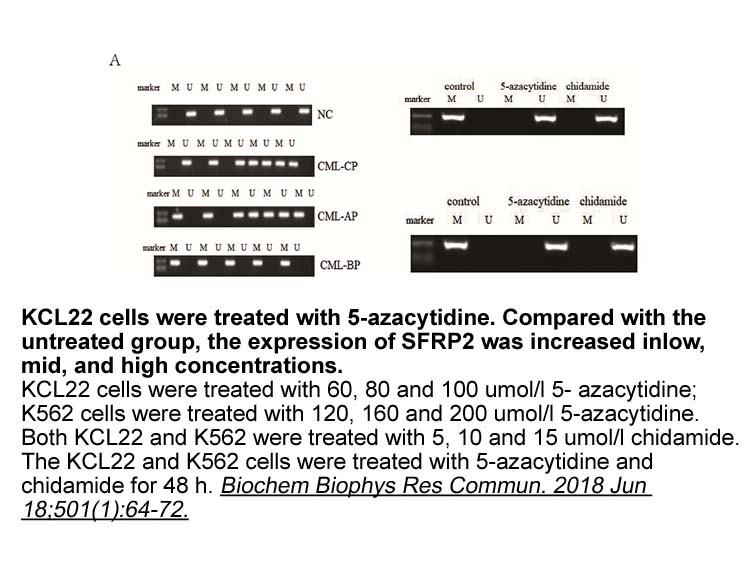
During recent years, two primary types of models have been applied for calculating various thermodynamic properties of amino PEG Virus Precipitation Kit sale solutions, i.e. excess Gibbs energy (gE) models used numerously to describe the solubility of amino acid solutions, and equations of state (E
-
br O GlcNAc transferase OGT belongs to
2020-12-28
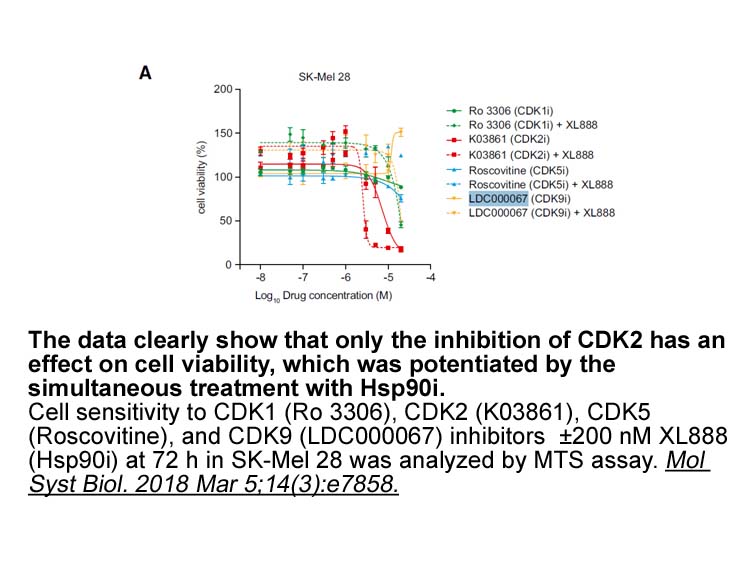
O-GlcNAc transferase OGT belongs to the metal-independent GT-B superfamily of glycosyltransferases, which has been well-reviewed previously [14,15]. OGT is an essential gene encoded on the X-chromosome, and it has two main regions: a long N-terminal tetratricopeptide repeat (TPR) region and a C-t
-
br Materials and methods br Results Among
2020-12-28
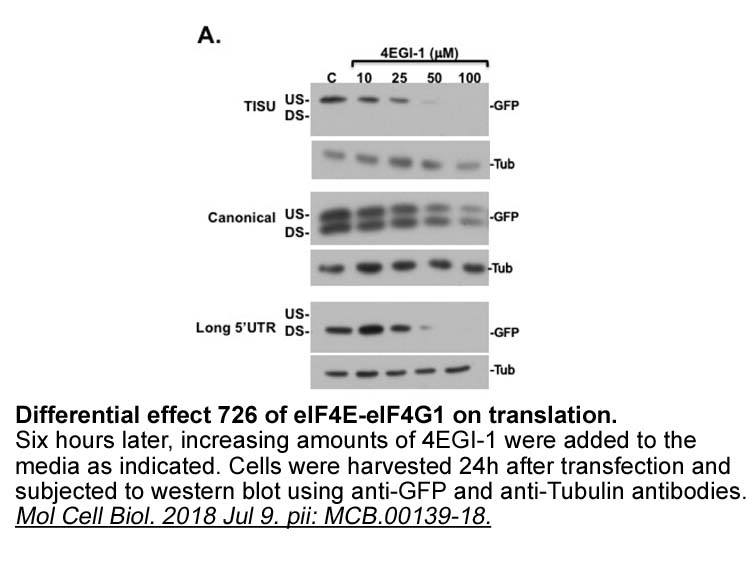
Materials and methods Results Among 17,061 probes, the Phosphatase Inhibitor Cocktail (2 Tubes, 100X) of 758 probes (4.4%) showed at least a 2-fold upregulation (230 probes) or downregulation (528 probes) at day 3 after VMH lesioning as compared with sham-VMH lesioning. Supplement Table 1 show
-
Cholic acid receptor Targeting both PARP and DHODH for anti
2020-12-28
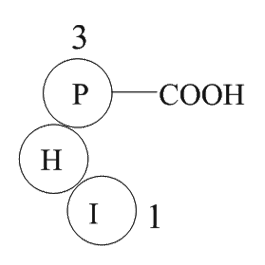
Targeting both PARP-1 and DHODH for anti-cancer therapy would certainly be beneficial as these enzymes share a common role in the DNA replication and repair mechanisms which are involved in the hyper-proliferation of cancer cells. Since benzimidazole-containing compounds have been reported to show g
-
Overexpression of EP and DDR
2020-12-28
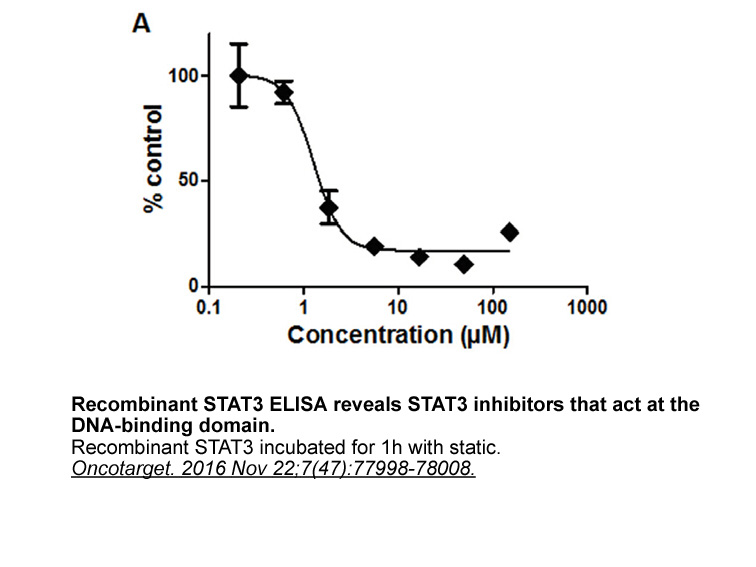
Overexpression of EP300 and DDR1 has been sporadically reported in the pathogenesis of pulmonary fibrosis and other fibrotic diseases. Zeng et al. reported that EP300 was increased in TGF-β1 treated lung fibroblasts and mediated decreases of SIRT1 expression. Bhattacharyya et al. found that both EP3
-
CYP A is involved in
2020-12-28
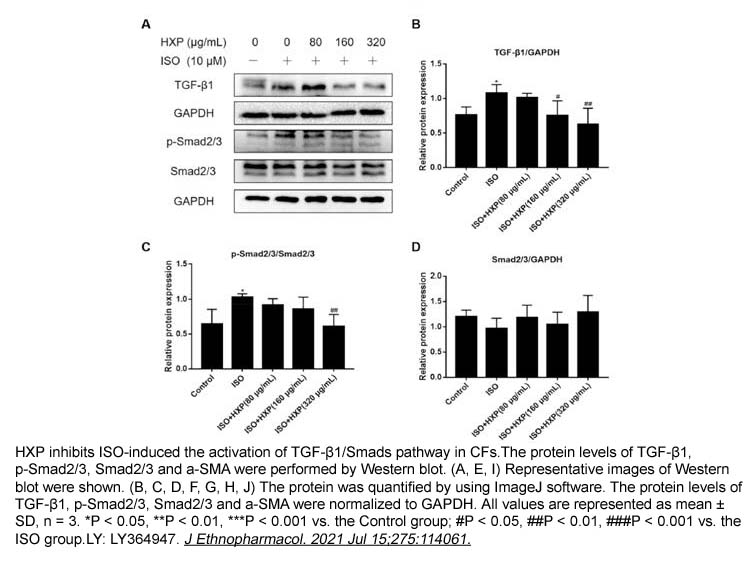
CYP3A is involved in the enzymatic 873 of many therapeutic agents [29]. The activity of BFCOD has been used to monitor CYP3A activity in humans [30], pigs [31], mice [32], and fish [23]. The predominant isoform expressed in the human liver is CYP3A4 [33]. In pigs, CYP3A29 contributes most to CYP3A
16441 records 783/1097 page Previous Next First page 上5页 781782783784785 下5页 Last page